Choy Lee Fut — Chapter 3: Cin Zi (by Chu Siu Ki)
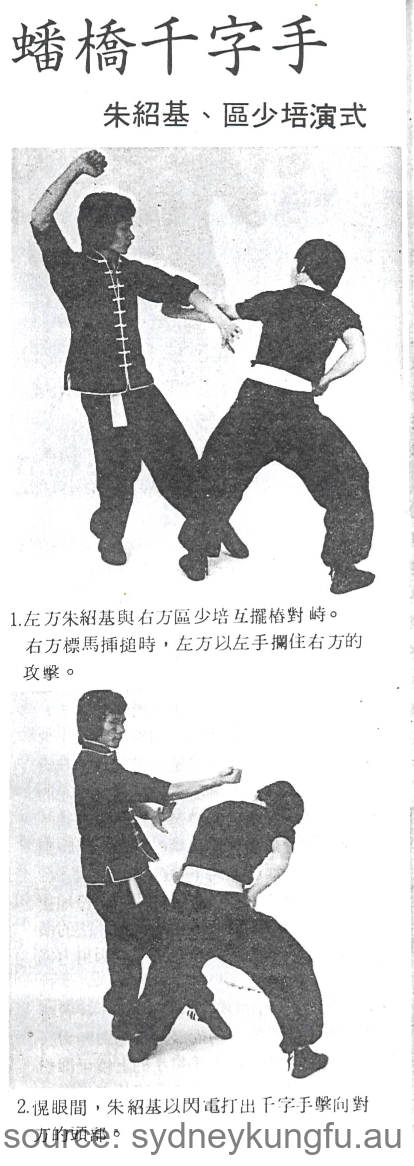
The practical striking methods of Choy Lee Fut 蔡李佛 include many effective open-hand techniques beyond the canonical “ten methods.” Although these cannot be classified among the ten, they are by no means inferior in real combat. In fighting, techniques are tightly interlinked with the ten methods in continuous, reciprocal attacks. Such linked attacking methods have no fixed single form, yet habitual techniques become distinctive and representative—for example, pun kiu 盤橋 sweeping strikes, gwaa ceoi 掛搥 with caang zoeng 撐掌, arrow-style foot strikes, and the cin zi 千字手 leading into biu/zong 標撞 types discussed here—all are characteristic continuous-combat methods.
Features of the cin zi 千字手
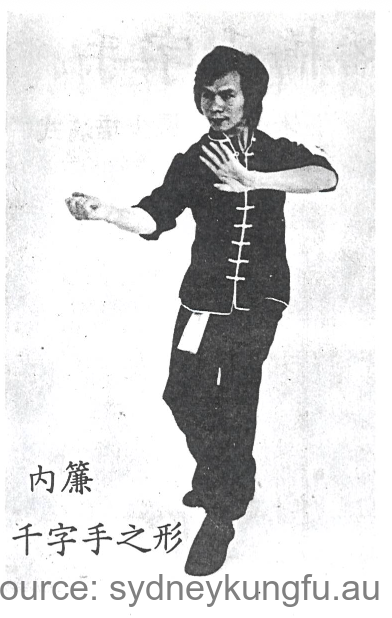
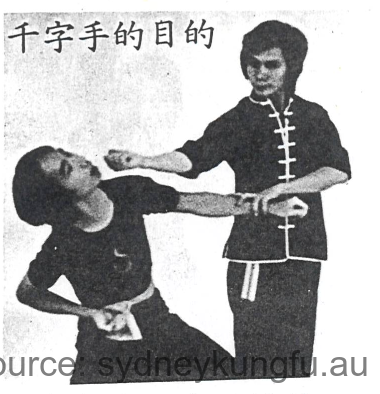
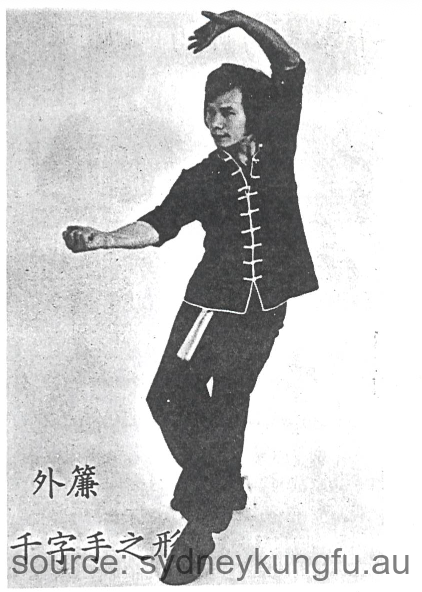
The cin zi 千字手 is a short-range, rotationally generated oblique strike. In combat, regardless of the hand’s starting position, when other techniques are not available the bridge hand will turn naturally or follow with a rotating pursuit. The elbow lifts slightly, then reverses direction and slashes downward at an angle, striking with the forearm and the lower part of the palm. This is an intercepting strike, similar in appearance to a vertical chop: in real fighting, practitioners use arms, elbows, forearms, palms and fingers for actions such as drawing, snapping, chopping, hooking, slicing, inserting and probing. The methods operate through a mixture of horizontal lines, straight lines and arcs that move back and forth. Whether a technique is executed skillfully depends on the practitioner’s alertness and correct usage. Although formal training in the methods is important, many techniques are similar and learners frequently confuse them by name or movement—for example, pik ceoi 劈搥 and cin zi 千字手 are often considered the same by some. In detail they differ considerably: the pik ceoi 劈搥 is a straight, downward, press-like strike driven predominantly by linear force, a more surface-level blow; the cin zi 千字手 emphasizes rotational oblique striking that combines arc rotation with an oblique-to-straight driving force.
Forms and types of cin zi 千字手
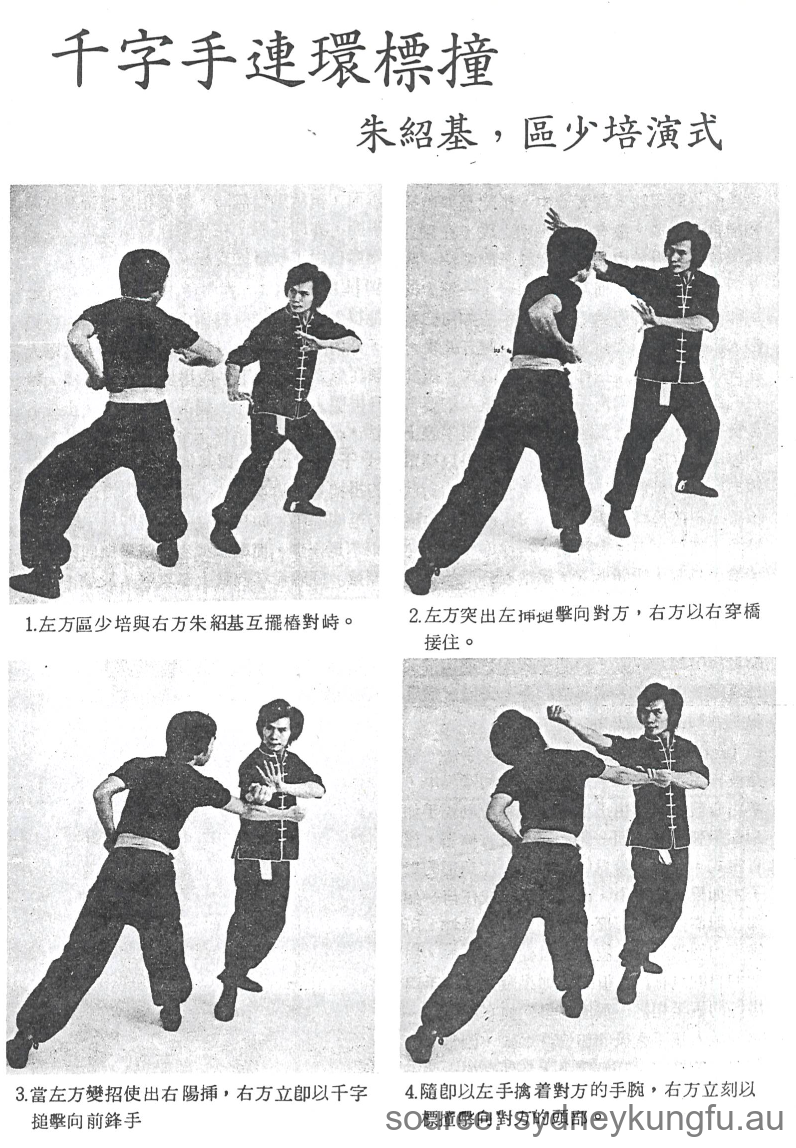
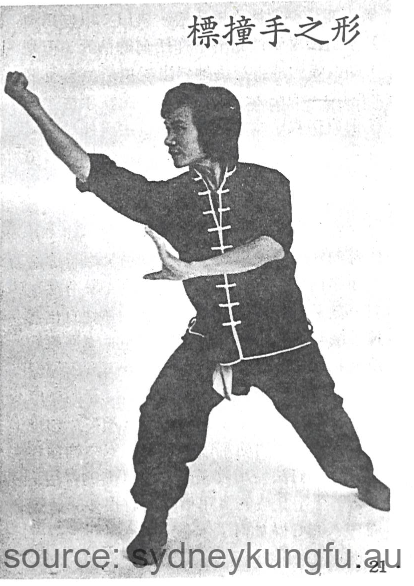
In fixed training forms the cin zi 千字手’s forearm resembles a slanted blade. The body shape is not constrained by the hand technique—nor is the hand technique constrained by body shape. Whether the torso leans forward or back, or the stance is sei ping maa 四平馬, zi ng maa 子午馬, or diu maa 吊馬, the cin zi 千字手 retains its essential character; only its position shifts with different body alignments. The cin zi 千字手 has long and short variants: the long cin zi (large outer arc) and the short cin zi (small internal arc). Visually the long form looks more linear while the short form is more curved—these represent outward appearances of the same method. A hallmark occurs when the rotational momentum finishes and the posture locks: the performer often leans slightly forward and to the side, the elbow drops and the shoulder sinks a little—this is known as “sinking elbow and dropping shoulder” (沉肘落膊). Only with that sinking quality can the power be expressed as solid and deep. Because this technique moves sharply, over-forceful practice can cause loss of targeting. Consequently, Choy Lee Fut 蔡李佛 demands high standards for performing this method: initial training emphasizes cultivating stability and internal power. Also, because the cin zi 千字手’s bridge-hand positions vary greatly at the end of a sequence, instructors often use a follow-up biu/zong 標撞 motion as a remedial connector to preserve advantage when the cin zi handwork finishes.
Practical value of the cin zi 千字手
The practical value of the cin zi 千字手 lies in the absence of a single fixed response in real fighting—what is called “no-fixed-method” (打無定法). Because it is hard to predict an opponent’s attack or target exactly, the first step can be a large-circle attack: in Choy Lee Fut 蔡李佛 practice there is no rigid “receive” technique; the principle is “use striking to dissipate.” This large-circle method does not rely on precise prediction; it produces a fan-shaped slashing arc from above down that pressures the opponent’s vital points. Even when the opponent has not committed a move, this handwork can reach key targets—this is the large-circle application of the cin zi 千字手. In special situations, if a single strike misses, the cin zi 千字手 must still guard the centerline to prevent the opponent’s closing steps. Then auxiliary methods such as pun kiu 盤橋 or clapping transitions are needed for support. If the cin zi 千字手 can correctly engage the opponent’s bridge-hand, one can then flow into a follow-up 標撞 upward strike to continue a pressing, chained offense. This is the common chained cin zi → 標撞 sequence in Choy Lee Fut 蔡李佛, repeatedly advancing and applying continuous pressure. Typical targets for the cin zi 千字手 include the neck, the temple (太陽穴), the inner curve of the opponent’s hand, and the opponent’s shin when they kick. The cin zi 千字手 has many practical nuances beyond these descriptions; its full utility depends on the practitioner’s understanding and experience.